

I am writing from inside a house that breathes and incubates. South-facing glass filters winter light and stores it in the thermal mass of cement floors and tire walls packed with rammed earth - a system designed to cultivate invisible forces, to render legible the flows of energy that most architecture denies. The earthship performs its own functioning. It shows you how it works by working.
This seems like the right place to reintroduce myself.
I’ve been working in what felt like silence for a long time. Accumulation - years of it, the kind that looks like absence from outside. Seven years designing coordination mechanisms for decentralized organizations, building interfaces for systems that don’t yet know what they want to become. A decade pacing circles in the floor while I write a PhD dissertation in my head. It’s on optico-centrism - the theory that consciousness comes to know itself through optical technologies, that the history of painting is the history of the eye learning to see its own seeing. I completed the coursework in 2018, wrote the prospectus in 2019, and then the writing was interrupted by circumstances that reshaped everything in my life. The themes never stopped working on me. Longer than any of that: making images, making sound, making systems for making both. The work never stopped. What stopped was the public thread.
There’s a reason for that, and it has nothing to do with modesty. Convergence takes time. The slower recognition that what appeared to be separate practices were always investigating the same phenomenon from different entry points. The fine art practice and the protocol design. The musical notation systems and the knowledge management obsession. The phenomenology and the cryptography. One inquiry, multiple instruments.
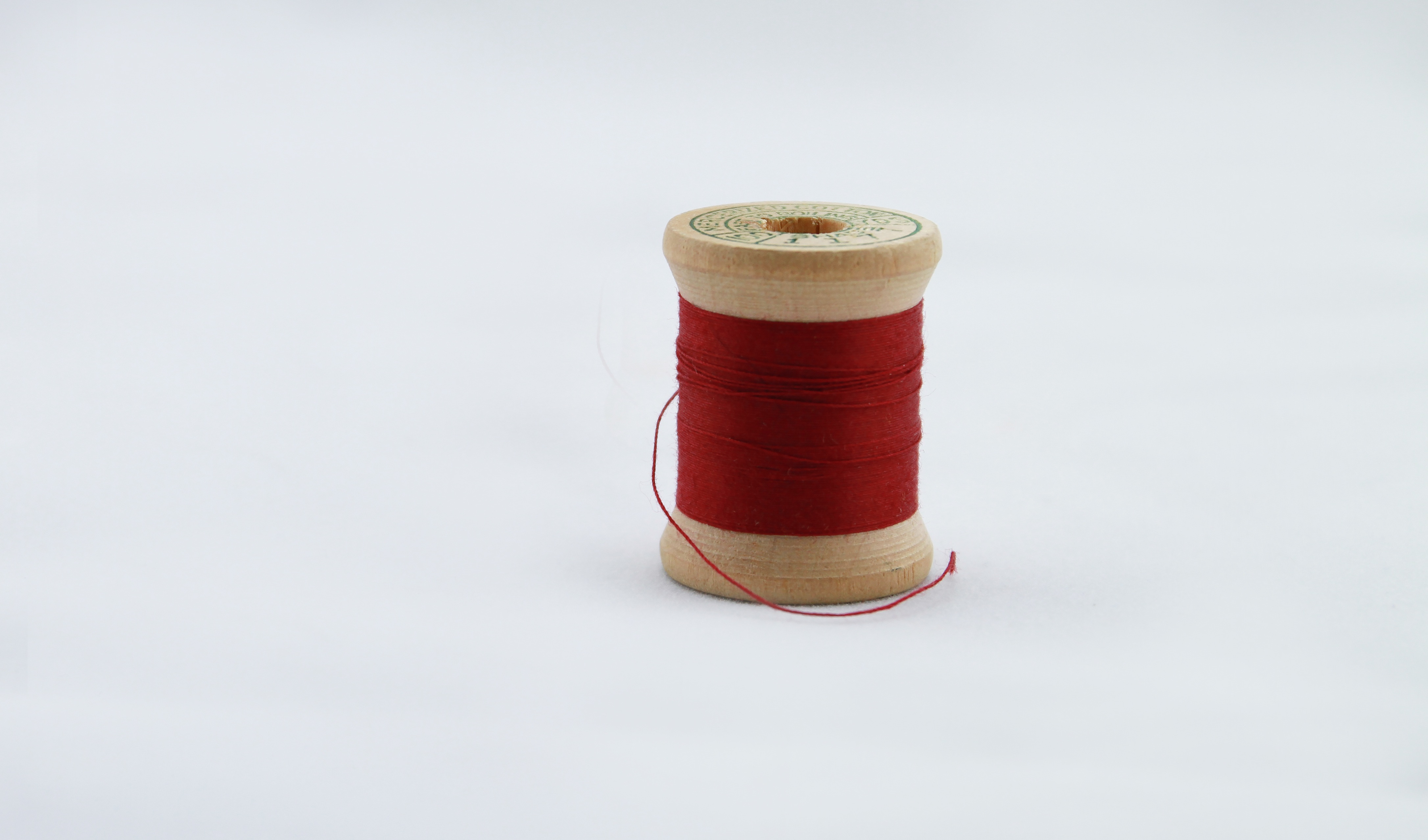
I’ve started calling this the red thread - a recognition that emerged only after the archive reached critical mass. Enough weird artworks, enough code, enough failed experiments in making consciousness visible to itself. The thread was always there, woven through everything, but seeing it required a particular density of material before the pattern could emerge from it.
Here is the pattern, or at least its current articulation:
All disciplines strive for the same essential understanding. Consciousness strives to become more aware of itself.
This observation sits comfortably with mysticism and equally comfortably with science, dwelling in the space where they touch without asking permission from either. It’s a claim about what practices do, regardless of what they claim to be about. A painter manipulating pigment on a surface is constructing an optical technology, a machine for reorganizing perception. A software architect designing an interface is building a prosthesis for awareness, a structure that shapes what can be seen and therefore what can be thought. A composer developing a notation system is creating a grammar for making time visible, translating the ephemeral into the inscribable. Different materials, different temporalities, different ecologies of attention. Same inquiry.
My PhD research refers to this as optico-centrism. The term sounds academic because it is, but the phenomenon it names is everywhere: the way vision operates as the dominant metaphor for understanding, the way “I see” means “I understand,” the way technologies of visualization - from cave painting to virtual interfaces -participate in consciousness’s self-constitution. The eye constructs what it receives, shapes the world it perceives, collaborates with light and surface and angle to produce seeing as an act rather than a reception. And the technologies we build to extend the eye change what “seeing” means, each new apparatus creating new possibilities for consciousness to catch itself in the act.
This matters beyond art history. We’re in an era of unprecedented tool-making, and the tools are making us back. The interfaces we design shape the attention of everyone who uses them. The protocols we build encode assumptions about coordination, trust, and value that become infrastructural, invisible precisely because they work. The question is whether we’re doing any of it with awareness of what we’re doing.
I’ve spent the last seven years thrashing around in the wreckage and promise of web3, watching coordination mechanisms emerge, fail, mutate, and occasionally achieve something unprecedented. DAOs of intelligent people that couldn’t govern themselves. Token systems that captured value without creating any of it. And sometimes, rarely, but enough to matter, experiments in collective sense-making that pointed toward something genuinely profound. The work was about whether we could build systems that escape the extractive logics that seem to reproduce themselves through every institutional form. Moloch at the protocol layer. The question of whether mechanism design can encode different incentives, or whether the tools always inherit the intentions of the system that produced them.
I have a practice, which is what you have when you don’t have answers. The practice involves building while remaining uncertain, designing interfaces that make their own assumptions visible, writing code that knows it doesn’t know what it’s for yet. This is what I mean by the magical interface: systems that create conditions for wonder, that cultivate attention while doing complex work in the background, that anticipate intention and guide it toward fruition. Enchantment as design principle. The interface that rewards slowness, that reveals more the longer you look, that feels alive because it participates in its own functioning. The value flows back to the user, amplified, invigorated. The complexity serves you rather than surveils you. The earthship bakes in its thermal mass. The protocol stews in its governance. The interface reveals its politics. And when transparency is handled with enough care, it still feels like magic.
The creative practice has always been the laboratory for these questions, the place where the inquiry gets to be itself without justification. I make images using a formal language derived from ad hoc Gestalt principles - systematic enough to be teachable, open enough to accommodate emergence, rigorous enough to generate surprise, even in myself (especially in myself). I make music through notation systems designed for collaborative practice, attempting to render audible the relational dynamics that usually stay implicit, the way attention moves between players, the way a score can be a script for listening as much as playing. I write in forms that move between philosophy and confession, theory and texture, direct address and side-eyed invocation, sometimes forgetting which register I’m in and discovering that the forgetting was the point.
These three practices of my dream palace - image, sound, text - inform each other continuously, feeding and metabolizing and excreting into one another like organs in a single body. The notation systems borrow from the visual grammar of the drawings. The writing attempts to make visible what the music makes audible. The digital paintings encode temporal structures I first understood through composition. The red thread runs through all of them because they were never separate to begin with. Only my explanations of them were separate, and explanations are always after the fact, sweeping up behind the actual work like some flustered custodian of meaning.
None of this is separate from the professional work, or the academic work, or the daily practice of managing a knowledge system that now spans almost two decades of notes, fragments, letters, and false starts. The personal knowledge management obsession is an experiment in whether externalized memory can become externalized mind, whether the archive, sufficiently dense and efficiently structured, begins to think alongside me rather than merely storing what I’ve already thought. The AI agents I’ve been building are prostheses for attention, attempts to make visible the patterns in my own practice that I can’t see from inside it, the way a mirror shows you your face that you otherwise only know from the inside as sensation and proprioception and vague spatial inference.
This is what I mean by an existential operating system. Infrastructure for the examined life, tools that help consciousness examine itself. The examined life requires instruments. Always has. The question is whether we can build instruments adequate to the examination, and whether we can do it without the instruments becoming another thing to be examined, another layer of mediation to see through, another hall of mirrors in a life already mirrors-all-the-way-down.
I’m writing this because the solitary phase has reached its limit. The work will never be finished. Convergence keeps converging, the pattern keeps revealing new threads, but the inquiry needs witnesses now. Interlocutors. The potlatch economy of attention requires circulation or it stagnates into mere accumulation, and I’ve accumulated enough silence.
So please, consider this an invitation. I’ll be writing about interfaces and optics, about coordination mechanisms and notation systems, about what it might mean to build tools that help rather than harvest. Some of it will be technical. Some of it will be philosophical. Some of it will be art, or about art, or the kind of writing that doesn’t know the difference and doesn’t care to find out.
The red thread connects all of it, an ongoing recognition that the work, however scattered it appears, has always been one work. Consciousness striving to become more aware of itself, using whatever instruments come to hand.
The earthship breathes, and me within it. The light shifts in the pollen clouds. Something is becoming visible that wasn’t visible before.
I’m glad you’re here to see it.